Best Caribbean Islands for First-Time Travelers

Finding the best Caribbean islands for first-time travelers comes down to three non-negotiable factors. You want direct flights from major U.S. hubs, established tourism infrastructure, and widespread English proficiency. Your first island getaway should be entirely frictionless.
When you are just beginning to explore the region, you do not want to navigate multi-leg island hopper flights. You do not want to worry about complex ferry schedules or rural roads without streetlights. You want to land, grab a licensed taxi, and be on the beach with a cocktail in hand within an hour.
The islands that deliver this seamless experience consistently are the Dominican Republic, the Bahamas, Jamaica, Turks and Caicos, and Aruba. Each offers a completely distinct cultural footprint and vacation style.
Choosing the right one depends on whether you prefer a massive all-inclusive resort, a boutique luxury hotel, or a high-energy cultural immersion. This guide breaks down exactly what to expect from the most accessible destinations in the Caribbean. We cover airport logistics, driving times, safety, and honest cost estimates to help you plan.
At a Glance: Top Islands for First-Timers
- Dominican Republic (Punta Cana): Best for massive all-inclusive resorts, sheer value, and nonstop entertainment.
- The Bahamas (Nassau): Best for quick weekend getaways and sprawling mega-resorts with casinos.
- Jamaica: Best for distinct local culture, legendary hospitality, and adults-only retreats.
- Turks and Caicos: Best for quiet luxury, independent dining, and world-class white sand.
- Aruba: Best for consistent, hurricane-free weather and safe, walkable resort districts.
Table of Contents
- What Makes an Island Ideal for First-Timers?
- The Dominican Republic: Best for All-Inclusive Value
- The Bahamas: Best for Quick Getaways
- Jamaica: Best for Culture and Music
- Turks and Caicos: Best for Luxury and Beaches
- Aruba: Best for Consistent Weather
- Understanding Caribbean Weather and Seasons
- Budgeting: What a First-Time Trip Actually Costs
What Makes an Island Ideal for First-Timers?
Image suggestion: An aerial shot of a commercial jet approaching a runway flanked by turquoise water. | Alt text: Airplane landing over clear blue Caribbean water. | Caption: Nonstop lift is the defining factor for a stress-free first Caribbean vacation.
The Caribbean is a massive, diverse region comprising more than 700 islands, islets, reefs, and cays. While an adventurous traveler might love the idea of taking a puddle-jumper to a remote cay in St. Vincent and the Grenadines, that is a terrible idea for your first visit. The best Caribbean islands for first-time travelers prioritize logistics just as much as scenery.
First, airlift is everything. If you live on the East Coast or in the Midwest, you should be able to fly nonstop to your chosen island in under four hours. You want to arrive by lunchtime. Islands with massive international airports attract the most competition among airlines, which keeps flight prices reasonable and schedules frequent.
Second, the tourism infrastructure must be rock solid. You want modern roads, reliable cellular service, and regulated taxi or private transfer companies. You also want a destination where U.S. dollars are widely accepted and credit cards work without a hitch at hotels and major restaurants.
Finally, you want a destination that caters to your preferred travel style. If you want to pay one price and never pull out your wallet again, you need an island dominated by all-inclusives. If you prefer to rent a car and eat at a different local spot every night, you need an island with a strong independent restaurant scene and safe roads.
The Dominican Republic: Best for All-Inclusive Value
Image suggestion: A wide shot of a sprawling luxury resort pool in Punta Cana leading out to the ocean. | Alt text: Large swimming pool and palm trees at a Punta Cana all-inclusive resort. | Caption: Punta Cana is the undisputed capital of the Caribbean all-inclusive resort.
When Americans think of an effortless tropical vacation, they are usually picturing Punta Cana. Located on the eastern tip of the Dominican Republic, this region was purpose-built for tourism. It is the undisputed heavyweight champion of the all-inclusive vacation model.
Punta Cana International Airport (PUJ) is the busiest airport in the Caribbean. It receives dozens of nonstop flights daily from nearly every major U.S. city. The airport itself sets the tone immediately with its open-air, thatch-roofed terminals.
From the airport, the drive to the main resort zones takes anywhere from 15 to 40 minutes on modern highways. You will rarely deal with winding, treacherous mountain roads here.
Where to Stay and Play
Most first-timers end up on Bavaro Beach. This long, wide stretch of sand is lined shoulder-to-shoulder with massive resort complexes. If you want a deeper dive into the specific coastal areas, review our guide to the best beaches in Punta Cana.
The Dominican Republic offers the highest value per dollar in the region. Because there is so much competition among resort brands, you get massive suites, multiple pools, and expansive dining options for a fraction of what you would pay elsewhere. You will find excellent outposts from brands like Secrets, Excellence, Live Aqua, and Hyatt Ziva/Zilara.
Punta Cana is also incredibly social. It is a premier destination for bachelor and bachelorette parties, birthdays, and large get-togethers. If you are traveling with a crew, this is often the most cost-effective option for a luxury experience. In fact, the region hosts massive annual gatherings like Festopia Punta Cana 2027 (May 27 to June 1, 2027), which draws thousands to the Bavaro area for curated beach parties and concerts.
Need to Know for First-Timers
While the resorts are spectacular, Punta Cana is not designed for independent exploration. The resorts are massive, gated compounds. Most guests never leave the property except for coordinated excursions like catamaran cruises or dune buggy tours.
If you want to experience local Dominican culture, eat at neighborhood spots, or wander through historic towns, Punta Cana will disappoint you. You would need to drive two hours to the capital, Santo Domingo, to find that historical depth.
Safety is a common concern for first-time visitors, but the resort areas are heavily guarded and monitored. We break down the nuances of staying secure in our detailed analysis: Is Punta Cana Safe?.
Nightlife here is largely contained within the resorts or massive standalone clubs like Coco Bongo. It is a high-energy atmosphere. For a complete look at the after-dark scene, check out our Punta Cana Nightlife Guide.
The Bahamas: Best for Quick Getaways
Image suggestion: An aerial view of the Atlantis resort complex on Paradise Island. | Alt text: Atlantis resort towers and water park in the Bahamas. | Caption: The mega-resorts of Nassau and Paradise Island offer unmatched amenities just a short flight from the U.S.
The Bahamas is an archipelago of 700 islands, but for a first-timer, all roads lead to Nassau and Paradise Island. Located less than 200 miles off the coast of Miami, Nassau is the ultimate destination for a long weekend. Flight times from the East Coast are incredibly short, often clocking in at under three hours from New York.
Lynden Pindling International Airport (NAS) is modern, clean, and highly efficient. English is the official language, and the Bahamian dollar is pegged exactly one-to-one with the U.S. dollar. You can use American cash anywhere in the country without doing any mental math.
The Bahamas is one of the premier choices for group celebrations. If you are organizing a milestone trip, we highly rank it among the best birthday trips in the Caribbean.
Mega-Resorts and Casinos
The Nassau area is defined by two spectacular mega-resorts: Atlantis on Paradise Island and Baha Mar on Cable Beach. These properties are entirely different from the all-inclusives in the Dominican Republic. Here, you pay for your room, and all food, drinks, and activities are billed separately.
Atlantis is a legacy property. It is famous for its sprawling water park, marine exhibits, and family-friendly atmosphere. It leans heavily into a nostalgic, slightly dated, but beloved theme park aesthetic.
Baha Mar is the modern counterpoint. Opened in the last decade, it is sleek, luxurious, and heavily focused on high-end culinary experiences and nightlife. It houses the largest casino in the Caribbean and feels like a slice of upscale Las Vegas dropped onto a stunning white-sand beach.
U.S. Customs Preclearance
One of the greatest perks of flying out of Nassau is U.S. Customs and Border Protection Preclearance. When you depart NAS to fly back to the States, you clear U.S. customs and immigration inside the Bahamian airport.
When your flight lands in the U.S., you arrive as a domestic passenger. You bypass the notoriously long passport control lines in Miami or JFK, grab your bags, and walk straight to your car. For an anxious first-time international traveler, this perk is invaluable.
Jamaica: Best for Culture and Music
Image suggestion: A sunset view of Seven Mile Beach in Negril with a small reggae bar in the foreground. | Alt text: Sunset over a sandy beach in Negril, Jamaica. | Caption: Jamaica offers a distinct cultural footprint, blending legendary music, fiery cuisine, and dramatic landscapes.
Jamaica is not a passive destination. It is an island with a massive, globally recognized culture. From reggae and dancehall music to jerk cuisine and Blue Mountain coffee, Jamaica offers an incredibly strong sense of place.
Most first-time visitors fly into Sangster International Airport (MBJ) in Montego Bay. This airport serves as the gateway to the island's three primary tourist regions: Montego Bay, Negril, and Ocho Rios.
"Jamaica doesn't just host you; it immerses you. The hospitality here is entirely unique—proud, warm, and deeply rooted in a culture that commands global respect."
Jamaica is the birthplace of the modern couples-only all-inclusive resort. Brands like Sandals and Couples Resorts started here and perfected the model. If you are looking for a romantic escape without children, this island is a top contender. We frequently feature its properties in our roundup of the best Caribbean resorts for adults.
Montego Bay vs. Negril
Choosing your specific region in Jamaica is critical. Montego Bay is immediate gratification. You can leave the MBJ airport and be checked into a luxury resort like Half Moon or an all-inclusive like Round Hill in 15 minutes.
Negril requires a 90-minute drive down the coastal highway. It is entirely worth the trek. Negril is home to Seven Mile Beach, one of the longest and most spectacular stretches of sand in the Caribbean. The water is calm, clear, and faces west, offering legendary sunsets.
Negril also feels more integrated than Montego Bay. You can walk down the beach, passing luxury resorts, tiny boutique hotels, and independent reggae bars like Rick's Cafe. It is an excellent middle ground for travelers who want the safety of a resort but the freedom to explore a bit on foot.
The Club Mobay Hack
Sangster International Airport in Montego Bay can be notoriously chaotic. During peak arrival times, the immigration lines can snake through the terminal and take hours to clear.
For your first trip to Jamaica, booking the VIP arrival service known as Club Mobay is essentially mandatory. You pay a fee in advance, and a representative meets you as you step off the plane. They physically escort you past the standard immigration lines through a dedicated fast-track lane.
You are then seated in a private lounge with a complimentary rum punch while your luggage is retrieved. It transforms a highly stressful arrival into a seamless, luxurious experience.
Turks and Caicos: Best for Luxury and Beaches
Image suggestion: Crystal clear, impossibly turquoise water lapping against the pristine white sand of Grace Bay Beach. | Alt text: Turquoise ocean water and white sand at Grace Bay Beach, Turks and Caicos. | Caption: Providenciales in Turks and Caicos is renowned for having some of the clearest water on earth.
If your primary goal is to find the absolute best beach with the clearest, most blindingly turquoise water, you want Turks and Caicos. Specifically, you want the island of Providenciales (locally known as Provo).
Provo is served by Providenciales International Airport (PLS). It is a relatively small airport, but it receives direct flights from major hubs like New York, Atlanta, Miami, and Charlotte.
Turks and Caicos is a British Overseas Territory, but the U.S. dollar is the official currency. The electrical outlets are standard U.S. style, and English is the native language. It feels incredibly familiar to American travelers, minimizing culture shock.
The Anti-All-Inclusive Island
Turks and Caicos is fundamentally different from the Dominican Republic or Jamaica. It is not an all-inclusive destination. While there are a few exceptions (like the massive Beaches resort for families or Club Med), Provo is dominated by luxury condo-resorts and boutique hotels.
Properties like Grace Bay Club, The Palms, and Wymara offer full kitchens and massive living spaces. The expectation here is that you will leave your resort.
Provo has one of the best independent dining scenes in the Caribbean. First-time visitors should absolutely rent a car (though be aware they drive on the left side of the road) or rely on local taxis. You will want to spend your evenings hopping between high-end restaurants like Coco Bistro and casual beachfront spots like Da Conch Shack.
Grace Bay Beach
The center of tourism in Provo is Grace Bay Beach. It consistently ranks on global lists as one of the best beaches in the world. The sand is as fine as powdered sugar, and a massive barrier reef protects the shore, ensuring the water is perfectly calm and clear.
Because Grace Bay is lined with upscale resorts, it remains pristine and safe. You can walk for miles along the shoreline without encountering aggressive vendors. It is quiet luxury at its absolute best.
Aruba: Best for Consistent Weather
Image suggestion: The iconic twisted Divi Divi trees standing on the white sands of Eagle Beach under a clear blue sky. | Alt text: Fofoti tree on Eagle beach in Aruba. | Caption: Aruba's arid climate guarantees sunny days, bypassing the lush jungles found elsewhere in the Caribbean.
Aruba bills itself as "One Happy Island," and it is remarkably easy to see why. Located in the deep southern Caribbean, just miles off the coast of Venezuela, Aruba offers something entirely unique: a desert climate.
When you land at Queen Beatrix International Airport (AUA), you will not see lush, mountainous jungles. You will see cacti, aloe vera plants, and dramatic rock formations. Because it is so arid, Aruba gets very little rain. It guarantees nearly perfect, sunny beach days year-round.
More importantly, Aruba sits entirely outside the Caribbean hurricane belt. If you are planning a trip in September or October—the statistical peak of hurricane season—Aruba is the safest bet in the region. We highlight this heavily in our guide to the best Caribbean islands by month.
Safe and Walkable
Aruba is arguably the safest island in the Caribbean for tourists. It boasts a high standard of living, excellent infrastructure, and extremely low crime rates against visitors.
It is also one of the few islands where tourists are actively encouraged to walk off their resorts at night. The main tourist zone, Palm Beach, is lined with high-rise hotels like the Marriott, Hyatt Regency, and Ritz-Carlton. Across the street from these hotels is a sprawling, walkable strip of restaurants, bars, shops, and casinos.
You do not need to take a taxi to dinner if you stay in Palm Beach. You simply walk out the front door of your resort. For first-timers who feel claustrophobic staying entirely on a resort property, Aruba provides immense freedom.
Eagle Beach vs. Palm Beach
The island has two main resort zones. Palm Beach is the high-energy, high-rise district. The water is calm, but the beach is packed with water sports, jet skis, and boat charters.
Eagle Beach, located just to the south, is the low-rise district. It is wider, quieter, and famous for its iconic, twisted Fofoti trees. It is highly residential, with fewer restaurants but far more space on the sand. If you want peace and quiet, book a property on Eagle Beach.
Like Nassau, Aruba also offers U.S. Customs Preclearance at AUA airport. You will clear U.S. immigration before flying home, landing stateside as a domestic passenger.
Understanding Caribbean Weather and Seasons
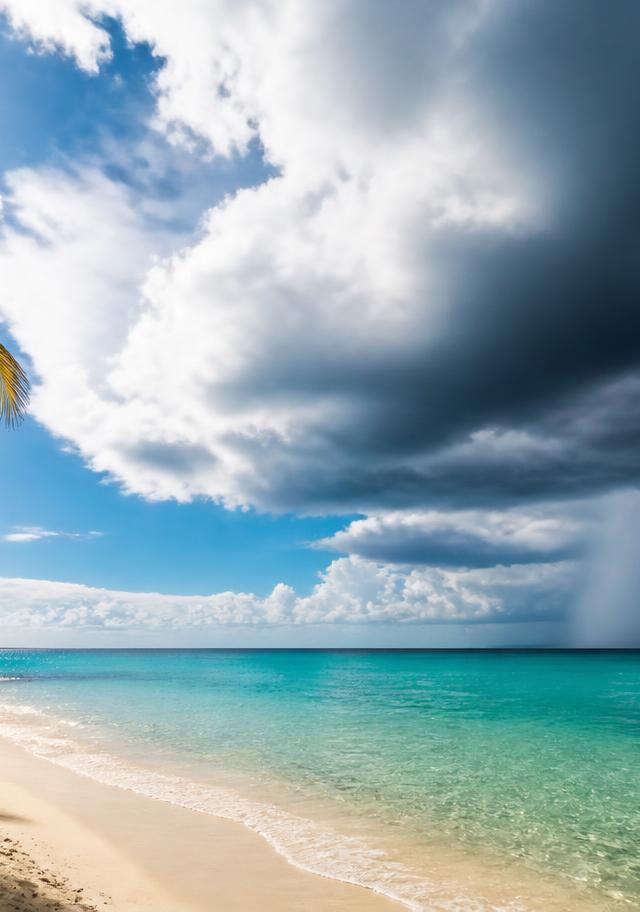
Image suggestion: A calm, sunny day on a Caribbean beach highlighting the clear water conditions typical of the winter months. | Alt text: Clear sunny sky over calm Caribbean beach. | Caption: Knowing when to travel is just as important as knowing where to go.
The Caribbean does not experience winter, spring, summer, and fall in the traditional sense. It has a dry season and a wet season. Understanding these cycles is crucial for a first-time visitor.
The high season runs from mid-December through mid-April. This is when the weather is spectacular. The humidity drops, the trade winds blow steadily, and rain is minimal. Consequently, this is also when flights and hotel rooms are at their absolute most expensive.
The Hurricane Season Reality
Hurricane season officially runs from June 1 to November 30. However, the statistical peak—when major storms are most likely to form—is between mid-August and late October.
If you travel during the peak of hurricane season, you are taking a gamble. You might get a week of flawless, empty beaches at heavily discounted rates. Or, your trip might be derailed by a named storm. If you must travel in September, prioritize islands outside the hurricane belt, like Aruba, Bonaire, or Curacao.
The Sargassum Seaweed Factor
Over the last decade, sargassum seaweed has become a massive issue for the region. This brown algae floats in massive mats across the ocean and washes up on beaches. It is unsightly and smells terrible as it decays in the sun.
Sargassum generally impacts the eastern and southern-facing coasts of the Caribbean, particularly from spring through late summer. Punta Cana's Bavaro Beach, Mexico's Riviera Maya, and the eastern shores of Barbados frequently deal with influxes.
Conversely, western-facing beaches—like Seven Mile Beach in Negril, Jamaica, or the western coast of Barbados—are typically spared. Before you book a summer trip, read our historical data on specific regions, such as Punta Cana weather by month, to understand your risks.
Budgeting: What a First-Time Trip Actually Costs
Image suggestion: A beautifully plated seafood dish and a tropical cocktail sitting on a table overlooking the ocean. | Alt text: Tropical cocktail and seafood plate on a beachside table. | Caption: Resort dining and activities add up quickly. Knowing your true budget dictates which island you should choose.
There is a massive misconception that the Caribbean is universally cheap. While you can certainly find budget-friendly pockets, mainstream resort travel is expensive. Your budget will largely dictate which island is right for your first trip.
A trip to Turks and Caicos will cost double or triple what a similar duration trip to the Dominican Republic costs. If you want to dive deep into value, you must start with a realistic baseline.
Note: All prices are approximate USD ranges for a standard 5-night trip for two adults. Prices shift dramatically based on whether you book during the festive high season (Christmas to Easter) or the quieter shoulder season (May to November). Travelers should always confirm current rates directly with airlines and properties.
Estimated Cost Breakdown (5 Nights for Two Adults)
| Category | Budget Tier (e.g., DR, Jamaica) | Mid-Range Tier (e.g., Bahamas, Aruba) | Luxury Tier (e.g., Turks and Caicos) |
|---|---|---|---|
| Roundtrip Flights | $600 - $1,000 | $800 - $1,400 | $1,200 - $2,000 |
| Accommodation | $1,200 - $2,500 (All-Incl) | $2,000 - $4,000 (Room Only) | $4,500 - $8,000 (Room Only) |
| Food & Drinks | Included | $1,000 - $1,800 | $1,500 - $3,000 |
| Airport Transfers | $80 - $150 | $100 - $200 | $150 - $300 |
| Total Estimate | $1,880 - $3,650 | $3,900 - $7,400 | $7,350 - $13,300 |
If you are trying to keep costs strictly managed, all-inclusive resorts in Punta Cana or Montego Bay are your safest bet. Because your meals and drinks are paid for upfront, you avoid the shock of $25 resort cocktails and $40 breakfast buffets.
To explore options that maximize every dollar, read our comprehensive breakdown of the best Caribbean vacations under $2,000.
When you opt for an independent island like Aruba or Turks and Caicos, you must budget heavily for dining. An average dinner for two at a nice restaurant in Aruba will cost between $100 and $150. In Turks and Caicos, expect that same dinner to cost closer to $250.
Always factor in transportation as well. Renting a car for a week will cost between $350 and $600 depending on the island, plus the cost of gas, which is heavily imported and significantly more expensive than in the United States. If you prefer to use taxis, be aware that very few Caribbean islands use rideshare apps like Uber or Lyft. You will rely on licensed, cash-only taxis, and a 10-minute ride from your resort to a restaurant can easily cost $20 each way.
Finding the Best Caribbean Islands for First-Time Travelers: Budget Categories
Image suggestion: A split frame showing a lively all-inclusive pool in the Dominican Republic next to a secluded luxury villa pool in Turks and Caicos. | Alt text: Side-by-side comparison of budget and luxury Caribbean vacations. | Caption: Your budget will heavily dictate your first Caribbean experience, from all-inclusive megacomplexes to boutique luxury.
Once you understand the baseline costs, you can start matching destinations to your wallet. Some islands cater specifically to high-volume, high-value tourism. Others restrict development to maintain exclusivity, which drives up the price of admission.
Budget-Friendly Entry Points
If you want to stretch your dollar without sacrificing the tropical experience, look to the Dominican Republic and Jamaica. Both countries have heavily developed tourism infrastructures and massive international airports.
Punta Cana (PUJ) and Montego Bay (MBJ) receive dozens of direct flights daily from major U.S. hubs. This high volume of lift keeps airfare competitive. More importantly, both destinations are dominated by all-inclusive resorts.
When you book an all-inclusive, your room, food, drinks, and non-motorized water sports are covered. This is the ultimate safety net for first-time visitors who want a predictable final bill. To see how these destinations compare to others on price, review our guide to the cheapest Caribbean islands to visit.
The Luxury Upgrades
If your budget allows for a higher daily spend, your options open up dramatically. Turks and Caicos, Grand Cayman, and St. Barts represent the upper echelon of Caribbean travel. These islands prioritize low-density tourism.
Turks and Caicos is famously accessible—just a three-hour flight from New York—but fiercely protective of its pristine Grace Bay. You will not find towering, thousands-of-rooms megacomplexes here. Instead, the shoreline is dotted with luxury condominiums, boutique hotels, and high-end restaurants.
Grand Cayman offers a similarly elevated experience along Seven Mile Beach. It is incredibly safe, meticulously clean, and renowned for its culinary scene. You will pay a premium for everything from a taxi ride to a beachside cocktail, but the tradeoff is an exceptionally polished, frictionless vacation.
Matching the Island to Your Travel Style
The most common mistake new travelers make is booking a destination based purely on a photo of a beach. Every island has a distinct personality. You must match that personality to the people you are traveling with.
Best for Groups: The Bahamas or Dominican Republic
Traveling with ten friends requires logistical simplicity. You need a destination with easy flights from multiple cities, large resorts that can accommodate group dining, and a variety of activities.
Nassau, Bahamas, is built for groups. Mega-resorts like Baha Mar and Atlantis offer sprawling casinos, massive waterparks, and dozens of restaurants on property. Your group can split up during the day and easily reconvene for dinner. For more options, browse our selections for the best Caribbean islands for groups.
Best for Couples: St. Lucia or Antigua
If romance is the goal, you want dramatic scenery and intimate spaces. St. Lucia is the Caribbean's answer to Bora Bora. The towering Piton mountains provide a stunning backdrop for boutique resorts built right into the cliffside, many featuring private plunge pools.
Antigua boasts 365 beaches—one for every day of the year. It has a quieter, distinctly British-influenced charm. The island is dotted with upscale, couples-only properties that prioritize privacy and world-class service. For a curated look at these properties, explore the best Caribbean resorts for adults.
Best for Solo Travelers: Aruba
Safety and ease of navigation are paramount when traveling alone. Aruba sits outside the hurricane belt and enjoys practically perfect weather year-round. It is arguably the most user-friendly island in the Caribbean.
The main tourist areas of Palm Beach and Eagle Beach are highly walkable. You can safely stroll from your hotel to dozens of restaurants, bars, and shops without needing a taxi. The local population is highly proficient in English, Dutch, Spanish, and Papiamento, making communication effortless.
Best for Families: Turks and Caicos
Families need calm water, safe surroundings, and direct flights. The water at Grace Bay in Turks and Caicos is protected by a massive barrier reef. This prevents heavy surf from reaching the shore, resulting in a shoreline that resembles a giant, remarkably clear swimming pool.
Children can wade safely, and parents can relax without fighting aggressive undertows. While the island is expensive, the sheer ease of traveling here with young children makes it a favorite for families upgrading from standard all-inclusives.
"Do not force a group trip onto an island built for honeymooners. Matching your travel companions to the island's infrastructure is the single most important decision you will make."
Understanding Caribbean Seasonality
Image suggestion: A bright, cloudless sky over a crowded Caribbean beach, juxtaposed with a quieter, slightly overcast shoulder-season afternoon. | Alt text: Caribbean beach weather comparison. | Caption: Prices and crowds peak from December to April, while savvy travelers often look to the shoulder season for value.
Caribbean weather is not identical year-round. Understanding the seasons is critical to managing both your budget and your expectations. We break this down comprehensively in our guide to the best Caribbean islands by month, but here are the core rules.
The Festive and High Season (Mid-December to Mid-April)
This is peak travel time. Northern travelers are fleeing winter, and the Caribbean delivers consistent, dry, 82-degree days. Because demand is at its absolute highest, prices peak simultaneously.
If you plan to travel during the week between Christmas and New Year's Day, expect to pay double or even triple the standard room rates. Resorts enforce strict minimum stays during this period, and restaurants book out months in advance.
The Shoulder Season (May to July)
Late spring and early summer offer the best balance of weather and value. The winter crowds have gone home, but the heavy hurricane threats have not yet arrived. You will find more space on the beach, easier dining reservations, and slightly softer room rates.
The humidity begins to climb in June, and brief afternoon rain showers become more common. However, these showers rarely ruin a full beach day.
Hurricane Season and Sargassum (August to November)
Official hurricane season runs from June 1 to November 30, but historical data shows the highest risk period falls between mid-August and late October. Flights and accommodations plummet in price during these months.
If you travel during peak hurricane season, comprehensive travel insurance with "Cancel For Any Reason" (CFAR) coverage is non-negotiable.
You must also consider sargassum, a brown macroalgae that washes ashore on many eastern and southern facing Caribbean beaches during the spring and summer. While harmless, it smells like sulfur as it decays and can make swimming unpleasant. Keep an eye on local forecasts and consider beaches known for aggressive clearing, which we detail in our guide to the best beaches in Punta Cana.
Navigating Caribbean Safety
Image suggestion: A well-lit, busy tourist district in the Caribbean at dusk with licensed taxis waiting at a hotel stand. | Alt text: Safe Caribbean tourist zone at night. | Caption: Staying safe in the Caribbean requires the same basic street smarts you would use in any major global city.
Safety is a primary concern for first-time visitors. Mainstream Caribbean tourist zones are generally very safe, but they require standard situational awareness. We cover this specifically for popular regions in our guide answering is Punta Cana safe, and those same rules apply broadly across the region.
Taxis and Transportation
Do not hail random cars off the street. Always use official, licensed taxis arranged by your hotel, the airport dispatcher, or a trusted restaurant.
Most islands do not have meters in their cabs. You must clearly ask the price and agree on the fare to your destination before getting into the vehicle. Have small denomination US dollars ready, as taxi drivers rarely have change for a $100 bill.
Beaches and Riptides
The ocean is powerful. Do not assume every idyllic-looking beach is safe for swimming. Pay strict attention to local flag systems.
A green flag means calm conditions, a yellow flag indicates moderate surf and caution, and a red flag means no swimming due to dangerous undertows or riptides. If a beach does not have lifeguards or a flag system, ask the hotel staff about the water conditions before wading in.
Food and Water Safety
The safety of tap water varies drastically by island. In Aruba, the tap water comes from a highly advanced desalination plant and is entirely safe to drink. In the Dominican Republic and parts of Mexico, you should strictly consume bottled water, even when brushing your teeth.
When dining off-resort, stick to busy establishments with high turnover. High turnover means the ingredients are fresh.
Nightlife and ATMs
When leaving your resort at night, stick to well-lit, populated tourist districts. Travel with a buddy, watch your drinks being poured, and never leave a beverage unattended.
If you need cash, only use ATMs located inside major banks or highly secure hotel lobbies. Avoid standalone cash machines on the street, as they are prime targets for card skimmers.
Insider Tips for a Seamless First Visit
Getting the logistics right will dramatically reduce your travel anxiety. Here are the operational realities you need to prepare for.
Mastering the Currency You do not always need to exchange money. The US Dollar is universally accepted across almost all major Caribbean tourist hubs. However, you will often receive change in the local currency. Bring a stack of $1 and $5 USD bills from home to use exclusively for tips and small purchases, avoiding the exchange rate hassle altogether.
Handling Your Phone Plan Do not assume your cellular data plan covers the Caribbean. While AT&T, Verizon, and T-Mobile offer international day passes (usually around $10 per day), you must activate them before you leave. Without a pass, background app data can trigger hundreds of dollars in international roaming fees before your flight even lands.
Packing Smart The Caribbean is relentlessly casual. Leave the formal wear at home. Focus on lightweight, breathable linens and moisture-wicking fabrics. For a complete, stress-free breakdown of exactly what goes in your suitcase, consult our ultimate Caribbean packing checklist.
Navigating the Tipping Culture Tipping etiquette changes by destination. At all-inclusive resorts, check if tips are genuinely included; even if they are, handing a bartender a dollar with your first drink ensures excellent service all afternoon. On independent islands like Grand Cayman, check your restaurant bill carefully. A 15% gratuity is often automatically added, and leaving another 20% on top is an unnecessary double-tip unless the service was truly extraordinary.
Pros and Cons of a Caribbean Vacation
Before you finalize your booking, weigh the realities of the region.
| Pros of Caribbean Travel | Cons of Caribbean Travel |
|---|---|
| Incredible Accessibility: Short, direct flights from most major US hubs on the East Coast and South. | High Costs: Heavily imported goods make dining and shopping expensive outside of all-inclusives. |
| Pristine Natural Beauty: Some of the clearest water and best coral reefs on the planet. | Weather Risks: A distinct six-month hurricane season that requires careful planning. |
| Accommodation Variety: Options ranging from budget mega-resorts to ultra-exclusive boutique villas. | Sargassum Seaweed: Seasonal blooms can disrupt beach access on certain coastlines. |
| Warm Hospitality: Tourism is the primary economic driver, resulting in highly developed service cultures. | Logistical Friction: Island time is real; service at independent restaurants can be noticeably slower than in the US. |
Common Mistakes First-Time Caribbean Travelers Make
Even the most prepared travelers occasionally stumble. Avoid these frequent errors to keep your first Caribbean trip on track.
- Mistake: Assuming everywhere takes credit cards.
Fix: Cash is still king for taxis, beach vendors, and small local tips. Always carry a physical reserve of low-denomination US dollars.
- Mistake: Ignoring the sargassum forecast.
Fix: If traveling between May and October, research the island's coastline. Book west-facing beaches, which typically dodge the seaweed, or choose resorts with aggressive daily clearing protocols.
- Mistake: Booking flights to the wrong airport.
Fix: Double-check airport codes. St. Lucia has two airports; flying into the wrong one can mean a two-hour, expensive taxi ride across mountainous terrain to reach your resort.
- Mistake: Forgetting reef-safe sunscreen.
Fix: Pack this from home. Many islands legally ban sunscreens containing oxybenzone and octinoxate. Buying approved brands at a resort gift shop can cost upwards of $30 a bottle.
- Mistake: Relying on rideshare apps like Uber.
Fix: Most Caribbean islands do not allow rideshare apps to operate. Pre-arrange airport transfers through your hotel or a reputable private company before you land.
- Mistake: Not booking dining in advance at luxury destinations.
Fix: High-end restaurants in St. Barts, Turks and Caicos, and Grand Cayman book out weeks in advance during high season. Make your dinner reservations 30 days before you arrive.
- Mistake: Skipping travel insurance during hurricane season.
Fix: Weather is unpredictable from August to October. Buy a comprehensive policy with "Cancel For Any Reason" coverage to protect your investment.
- Mistake: Overpacking heavy clothing.
Fix: The humidity is formidable. Jeans and heavy jackets will sit in your suitcase untouched. Pack light, loose, breathable fabrics.
- Mistake: Drinking the tap water without verifying safety.
Fix: Unless you are on an island known for advanced desalination (like Aruba), default entirely to sealed, bottled water for drinking and tooth-brushing.
- Mistake: Staying trapped on the resort the entire trip.
Fix: Break the resort bubble at least once. Book one licensed excursion, whether it is a catamaran sail or a guided historical tour, to experience the actual culture of the island.
Key Takeaways
- Your budget sets the map: All-inclusive destinations like the Dominican Republic and Jamaica offer cost certainty, while independent islands like Turks and Caicos require high daily dining and transport budgets.
- Match the island to your group: Do not book a quiet couples' enclave for a loud group trip. Match your travel companions to the island's primary vibe.
- Seasonality dictates price: Traveling between Christmas and Easter is incredibly expensive. Traveling in the summer shoulder season offers the best mix of value and decent weather.
- Protect yourself logistically: Always use licensed taxis, bring small US bills for tipping, pack reef-safe sunscreen, and verify your cell phone plan before departing.
- Prioritize situational awareness: Heed beach warning flags, drink bottled water where necessary, and stick to populated, well-lit areas if leaving your resort at night.
Frequently Asked Questions
Do I need a passport to visit the Caribbean?
Yes, for almost all destinations. If you are a U.S. citizen, the only exceptions are U.S. territories like Puerto Rico and the U.S. Virgin Islands. Always ensure your passport is valid for at least six months beyond your planned date of departure.
What is the best month to visit the Caribbean?
May is widely considered the optimal month for a Caribbean vacation. The winter high-season crowds have departed, prices drop significantly, and the heavy hurricane threats of late summer have not yet arrived.
Which Caribbean island has the clearest water?
Turks and Caicos, the Cayman Islands, and the Bahamas are universally praised for having the clearest water in the region. Their shallow limestone shelves create a striking, translucent turquoise effect.
Is it safe to leave my resort?
Yes, in most major tourist destinations, it is perfectly safe to explore. Stick to populated areas, use official taxis, and leave flashy jewelry locked in your hotel safe.
Do I need to exchange money for local currency?
Generally, no. The U.S. dollar is widely accepted across almost all major Caribbean tourist hubs. You may receive local currency as change, but bringing small U.S. bills covers 99% of your needs.
How bad is Caribbean hurricane season?
It varies wildly by year. The season runs from June through November, peaking in August and September. If traveling then, purchase comprehensive travel insurance and consider islands outside the main hurricane belt, like Aruba, Bonaire, or Curaçao.
What is sargassum and will it ruin my trip?
Sargassum is a naturally occurring brown seaweed that washes ashore, predominantly in spring and summer. It mostly affects eastern-facing beaches. You can avoid it by booking resorts on western-facing coasts or choosing properties known for aggressive beach clearing.
Can I use my cell phone on the islands?
Most major U.S. carriers offer international day passes that allow you to use your domestic data plan for a flat daily fee. You must activate this feature with your carrier before landing to avoid massive roaming charges.
Do I need to tip at an all-inclusive resort?
While many all-inclusive resorts state that tips are included, bringing cash to tip bartenders, servers, and housekeeping is highly customary and greatly appreciated. It often results in faster, more attentive service.
Are the Caribbean and the Bahamas the same thing?
Geographically, no. The Bahamas are located in the Atlantic Ocean, north of the Caribbean Sea. However, they are culturally and logistically grouped into the Caribbean tourism sector for travel planning purposes.
How do I get around the island?
Licensed taxis and pre-arranged private transfers are the most reliable methods. Renting a car is an option on highly developed islands like Aruba, but be prepared for high gas prices and driving on the left side of the road in former British colonies.
What should I pack for my first trip?
Pack lightweight, breathable fabrics, multiple swimsuits, reef-safe sunscreen, polarized sunglasses, and comfortable walking shoes. Leave heavy clothing and expensive, flashy jewelry at home.
Choosing among the best Caribbean islands for first-time travelers comes down to honestly assessing your budget, your travel companions, and your tolerance for logistics. Start simple. Find an island with direct flights from your home airport, decide whether you want the safety net of an all-inclusive, and lean into the laid-back rhythm of the region.
When you are ready to elevate your Caribbean experience with curated events, world-class entertainment, and seamless group logistics, Festopia is your trusted resource. Join us for an unforgettable experience at Festopia Punta Cana 2027 or explore the massive lineup at Festopia Cancun 2027 to see how we redefine tropical travel.

The Festopia editorial team plans Caribbean festival weekends and travels the region year-round.
View all Travel Guides