How to Plan a Group Trip to Punta Cana Without the Stress

Table of Contents
- Lock Group Size and Dates First
- Resort Block vs. Villa
- Room and Occupancy Math
- Deposits and Splitting Payments
- Flights Into PUJ and Getting to the Resort
- Entry Requirements: The DR E-Ticket
- Keeping 10-20 Adults on One Loose Itinerary
- Handling Flakers
- FAQ
Group trips to Punta Cana fail for boring, fixable reasons: nobody picked a date until it was too late, the room math didn't work, and one guy's Venmo never showed up. None of that is about the destination. It's about the spreadsheet nobody made.
This is the operational version of the planning guide — the part where you actually book things, split money, and get fifteen adults through an airport without losing two of them at customs. If you want the general "why Punta Cana" pitch, read that elsewhere. Here's how you run it.
Lock Group Size and Dates First
Before you talk to a single resort, get a hard headcount and a locked date range. "Sometime in spring, probably 12-ish people" is not a plan a hotel sales office can quote against, and every week you wait, flights and rooms get more expensive and less available in blocks.
Send one message with three fixed date options (not a poll asking "when works for you," which just resets the clock) and a deadline for people to commit with a deposit, not a "yes." Anyone who hasn't paid by the deadline is out of the headcount used for booking. This sounds harsh. It is also the only way the math works.
Resort Block vs. Villa
For groups of roughly 10 to 20 adults, you're usually choosing between a room block at an all-inclusive resort and a private villa rental. Both work; they solve different problems.
A resort group block, arranged through the resort's group sales desk or a travel advisor, gets you a set of rooms held at one rate, often with a group amenity (a comped room per set number of paid rooms is a common structure resorts use, though the exact ratio varies by property and season). Everyone gets their own room, their own bathroom, and built-in food and drink without a shared kitchen to manage.
A villa puts everyone under one roof with a private pool and one big communal kitchen and living space, which is great for a trip that's more "family reunion" than "resort weekend," but it puts you in charge of catering, cleaning, and often ground transport in a way an all-inclusive resort does not.
| Factor | Resort room block | Private villa |
|---|---|---|
| Booking contact | Resort group sales desk or advisor | Villa management company or owner |
| Meals | Included, multiple restaurants | You arrange catering or cook |
| Privacy | Shared property with other guests | Fully private |
| Best group size | 10-40+ | Roughly 8-16 (bedroom-limited) |
| Flexibility to add/drop people | Higher — resorts adjust blocks | Lower — villa capacity is fixed |
| Nightlife/entertainment on-site | Built in | None, you go out for it |
Room and Occupancy Math
This is where trips quietly go over budget. Most standard all-inclusive rooms are built for double occupancy, with a per-person rate that drops once you add a third or fourth guest sharing the same room, and resorts cap how many total guests (and how many children) a given room category can legally and comfortably hold. That cap is set by the resort, and it varies by room type, so you cannot assume a room built for two will quote the same per-person price for four.
Work this backward from your headcount: figure out how many people are comfortable doubling up, whether anyone is paying a solo-occupancy premium for their own room, and whether triple or quad rooms are even offered in the category you want. Get the exact occupancy limits and per-person pricing from the resort or your advisor before you quote anyone a number — don't estimate.
Deposits and Splitting Payments
Collect a non-refundable-to-the-group deposit from every traveler before you put a dollar down with the resort or airline. If the resort requires a deposit per room to hold the block, that number needs to be sitting in a shared account or with the trip organizer before you commit — don't front it and hope for reimbursement later.
A few structures that actually hold up:
- One organizer collects and pays. Simple, but puts full financial and reputational risk on one person if someone doesn't pay.
- Each traveler pays the resort or booking platform directly once individual reservations are split off the block. More admin up front, less risk to any one person.
- A shared trip-payment tool or spreadsheet with a public running balance. Social pressure does a lot of the collections work for you.
Flights Into PUJ and Getting to the Resort
Punta Cana International Airport (PUJ) is the main gateway for this part of the Dominican Republic and sits closer to the Bávaro/Punta Cana resort strip than the Dominican Republic's other coastal airports, which is why it handles the bulk of group and charter traffic into the region.
You do not need everyone on the same flight, but you do need everyone landing within a window that lets one shared transfer (or a small number of them) cover the group, since private transfer companies price by vehicle, not by seat, and a van sitting half-empty at 11pm because half your group lands at 6pm is money wasted. Build a shared flight-tracking sheet with everyone's airline, flight number, and arrival time as soon as tickets are bought.
For transfers, private door-to-door service from PUJ to Punta Cana/Bávaro-area resorts typically runs in the 25-to-45-minute range depending on the specific property, and both private vans and shared shuttles are widely available to book in advance. Book ground transport before you land — arranging it curbside with fifteen bags and a group that's split across three flights is how you lose an hour and your patience on day one.
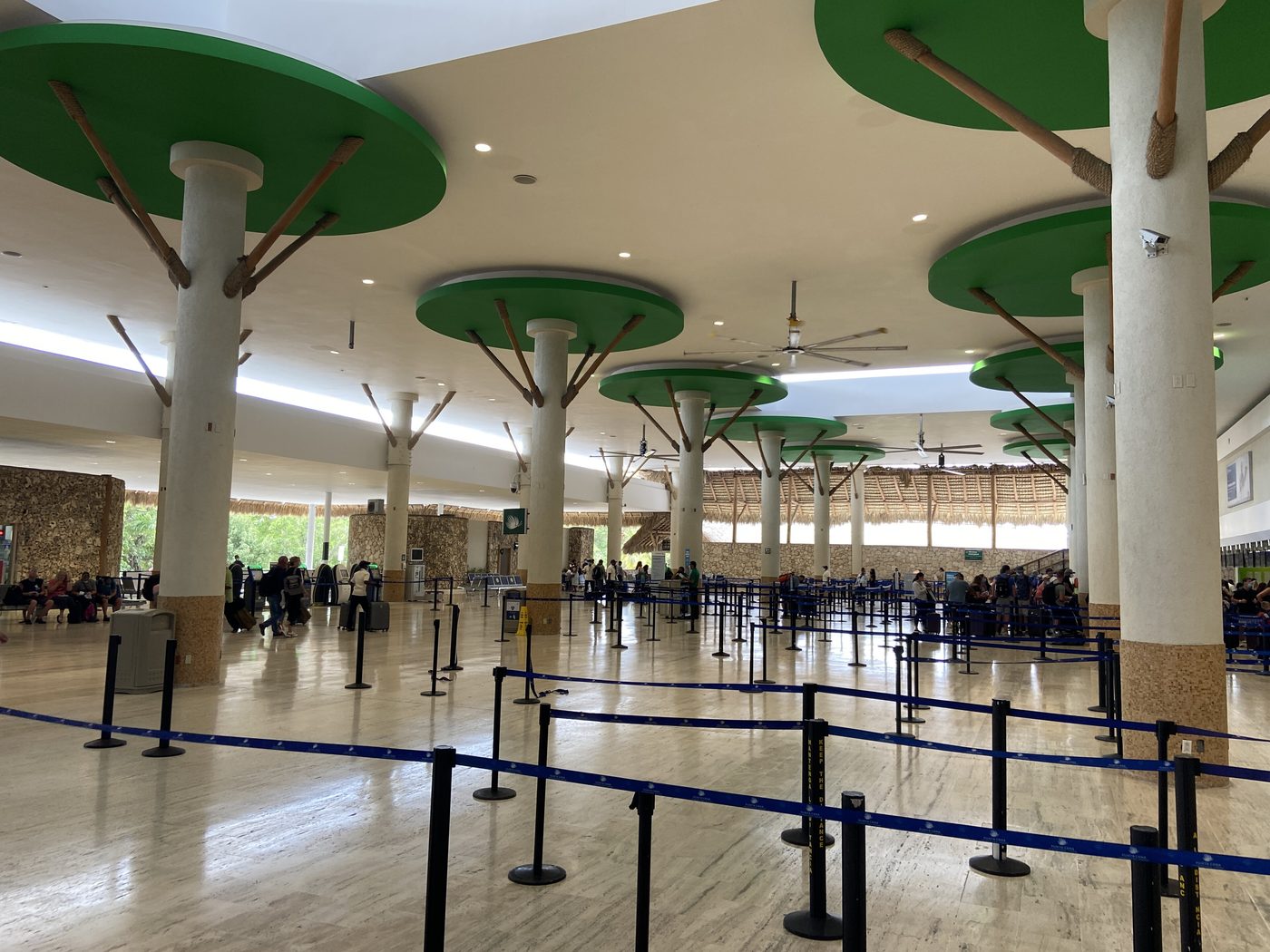
For a deeper airport-specific breakdown, see our PUJ airport and transfers guide.
Entry Requirements: The DR E-Ticket
Every traveler entering or leaving the Dominican Republic — including US citizens — is required to complete the government's electronic E-Ticket form, which replaced the old paper immigration and customs cards. It's free, completed online through the official Dirección General de Migración portal, and generates a QR code that travelers show at arrival and departure.
Make this a group task, not an individual one left to chance. Send the official link, a deadline (a day or two before departure is common practice, since the form is tied to travel dates), and a reminder that each traveler — including kids — needs their own completed form and QR code, not one per family assumed to cover everyone.
Passport validity and any US-specific entry rules can change, so confirm current requirements against the State Department's Dominican Republic travel page before departure rather than relying on what worked for a friend's trip last year. If part of your group is traveling from Canada, our Canadian entry requirements guide covers those specifics separately.
Keeping 10-20 Adults on One Loose Itinerary
You cannot run a 15-person trip on a timed, hour-by-hour schedule — someone will always be asleep, hungover, or on the beach and unreachable. What works is a loose skeleton with two or three anchor events per day that are opt-in but clearly communicated, and everything else left open.
Post the skeleton somewhere everyone can see it without asking you directly — a shared note, a group chat pinned message, whatever tool your group actually checks. Anchor points typically look like: one meal reservation or group activity per day, one designated "everyone meet here at X time" moment, and the rest unstructured.
The itinerary's job isn't to schedule the trip. It's to give scattered people two or three known points to regroup at.
If your trip is built around a specific event — a wedding, a milestone birthday, or a festival weekend like Festopia Punta Cana 2027 — those fixed dates and times become your anchors automatically, which actually makes group logistics easier than an open-ended trip with no fixed events at all.

Handling Flakers
Someone will drop out. Plan for it before it happens rather than scrambling when it does.
Build your room and payment structure so that one person backing out doesn't collapse a shared room or a group flight discount — this is another reason individual deposits and clear per-person costs matter more than one organizer fronting everything. Set and communicate a cancellation cutoff date up front: after that date, whoever drops is responsible for finding their own replacement or eating the cost, not the group.
For milestone trips specifically, Festopia's birthday group program is worth knowing about if you're organizing around a birthday — qualifying groups of three or more travelers can unlock a free pass for the birthday person, which softens the blow if your numbers shift.
FAQ
How many people should be in a Punta Cana group trip room block?
There's no fixed minimum, but resort group sales desks typically start offering group rates and dedicated coordination once you're booking a meaningful block of rooms rather than a couple of individual reservations — ask the specific property what their threshold is, since it varies by resort and season.
Do I need a travel advisor to book a Punta Cana group trip?
No, but for groups above roughly 10 people, an advisor who works group contracts can often negotiate better terms, manage the room block administratively, and handle the cancellation-cutoff conversations so you don't have to.
What is the DR E-Ticket and when should I fill it out?
It's the Dominican Republic's mandatory free electronic entry and exit form, completed online through the government's official migration portal, generating a QR code required at arrival and departure. Complete it shortly before travel since it's tied to your specific dates.
How far in advance should a group book flights into PUJ?
As early as your dates are locked. Group flight pricing and seat availability on popular Punta Cana routes tighten well before travel, and coordinating everyone onto flights that land close together gets harder the longer you wait.
What happens if someone in the group cancels after paying a deposit?
That depends entirely on the cancellation terms in your resort contract and whatever internal policy you set with your group — which is why setting and sharing that policy before collecting the first deposit matters.
Is a villa or a resort room block better for a bachelorette or milestone trip?
A resort block generally suits groups wanting built-in food, drink, and entertainment without managing logistics; a villa suits smaller groups wanting full privacy and are comfortable handling their own catering and transport. See our best bachelor/bachelorette destinations guide for related planning notes.
Can group trips to Punta Cana actually save money over booking individually?
Group rates, shared transfer costs, and comped-room structures can lower the per-person cost meaningfully compared to booking solo, though the exact savings depend on the resort and season. Our group travel savings guide breaks down how that math generally works.
---
Sources verifying facts in this guide are listed below. Prices, occupancy limits, and specific policy terms should always be confirmed directly with the resort, airline, or government portal at time of booking, since they change by property and season.
Photo Credits
- Photo by Mattes via Wikimedia Commons — CC BY 2.0 de
- Photo by Mariordo (Mario Roberto Durán Ortiz) via Wikimedia Commons — CC BY-SA 4.0
- Photo by Matthewishere0 via Wikimedia Commons — CC BY-SA 4.0
- Photo by https://www.youtube.com/channel/UC5x2cmttQ37LIYbW2uHZ9ZQ/about via Wikimedia — CC BY 3.0

Our team researches destinations, hotels, nightlife, excursions, and travel tips to help travelers plan unforgettable Festopia experiences around the world.
View all Travel Guides