Dominican Republic Entry Requirements for Canadians (2027 Guide)
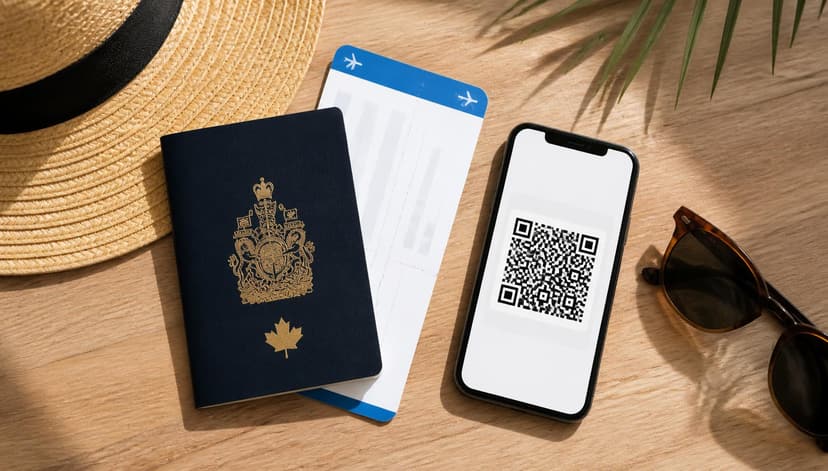
Getting into the Dominican Republic as a Canadian is genuinely easy — but the paperwork has changed. The blue paper forms flight attendants used to hand out are gone, replaced by a free online E-Ticket you complete before you fly. Miss it and you will be filling it in on airport Wi-Fi with a lineup behind you.
This guide walks through exactly what Canadian citizens and Canadian residents need for a 2027 trip to Punta Cana or anywhere else in the Dominican Republic: passport rules, the E-Ticket, customs limits, insurance, what happens on arrival, and what you need on the way home through the Canada Border Services Agency.
The short checklist
- Valid Canadian passport — valid for the full duration of your stay.
- Free E-Ticket — completed online for arrival, and again for departure.
- Proof of onward or return travel — your return e-ticket is enough.
- Travel medical insurance — not legally required, but essential.
- Address of your resort or hotel — you need it for the E-Ticket form.
That is it. No visa, no tourist card purchase at the airport, no vaccination certificate.
Do Canadians need a visa for the Dominican Republic?
No. Canadian citizens travelling for tourism do not need a visa for short stays. Canada is among roughly 100 nationalities admitted for tourism without a visa application, typically for stays up to 30 days, with extensions possible at a Migration office for a fee.
The old tourist card that used to be purchased separately is now bundled into your airfare by virtually every airline serving Canada, so there is nothing extra to buy at the airport.
If you hold a passport from another country — common for permanent residents of Canada — check the requirements for that passport, not for Canada. Your Canadian PR card does not determine Dominican entry rules.
Passport rules for Canadians
Canadian tourists need a passport that is valid for the duration of the stay. Unlike some destinations, the Dominican Republic does not impose a six-month post-departure validity rule on Canadians the way it does on some other nationalities.
That said, apply the practical rule most travel professionals use: do not fly internationally with less than six months of passport validity. Airlines have been known to apply stricter interpretations than governments, and a rebooked flight costs far more than a passport renewal.
Also check:
- Your name on the passport matches the name on your ticket and E-Ticket exactly.
- Children have their own valid passports — Canada does not add children to a parent's passport.
- Damaged passports (water damage, torn pages, loose covers) can be refused. Replace before you travel.
The E-Ticket: what it is and how to do it
The Dominican E-Ticket (Electronic Ticket for Entry and Exit) is a single online form that replaced three separate paper documents: the immigration card, the customs declaration and the traveller's health affidavit. It is mandatory for every traveller, including infants, and it is free.
Where: the official portal at eticket.migracion.gob.do. Complete it directly there — third-party sites charge fees for a free government form.
When: you can complete it any time before travel. Doing it 24–72 hours out is common; doing it before you leave for the airport is essential.
How many: one QR code for entry and one for exit. Many travellers fill in the entry form, then forget the exit form and end up doing it in the departures hall at PUJ. Fill in both before you leave home.
Groups and families: one submission can cover a family or group travelling together on the same itinerary and staying at the same address, which produces a single QR code for the group.
What you'll need: passport details, flight numbers, arrival and departure dates, the name and address of your resort or hotel, and basic customs declaration answers about goods and currency.
Then: save the QR code as a screenshot and print a copy. Airport Wi-Fi is not a plan.
What actually happens when you land in Punta Cana
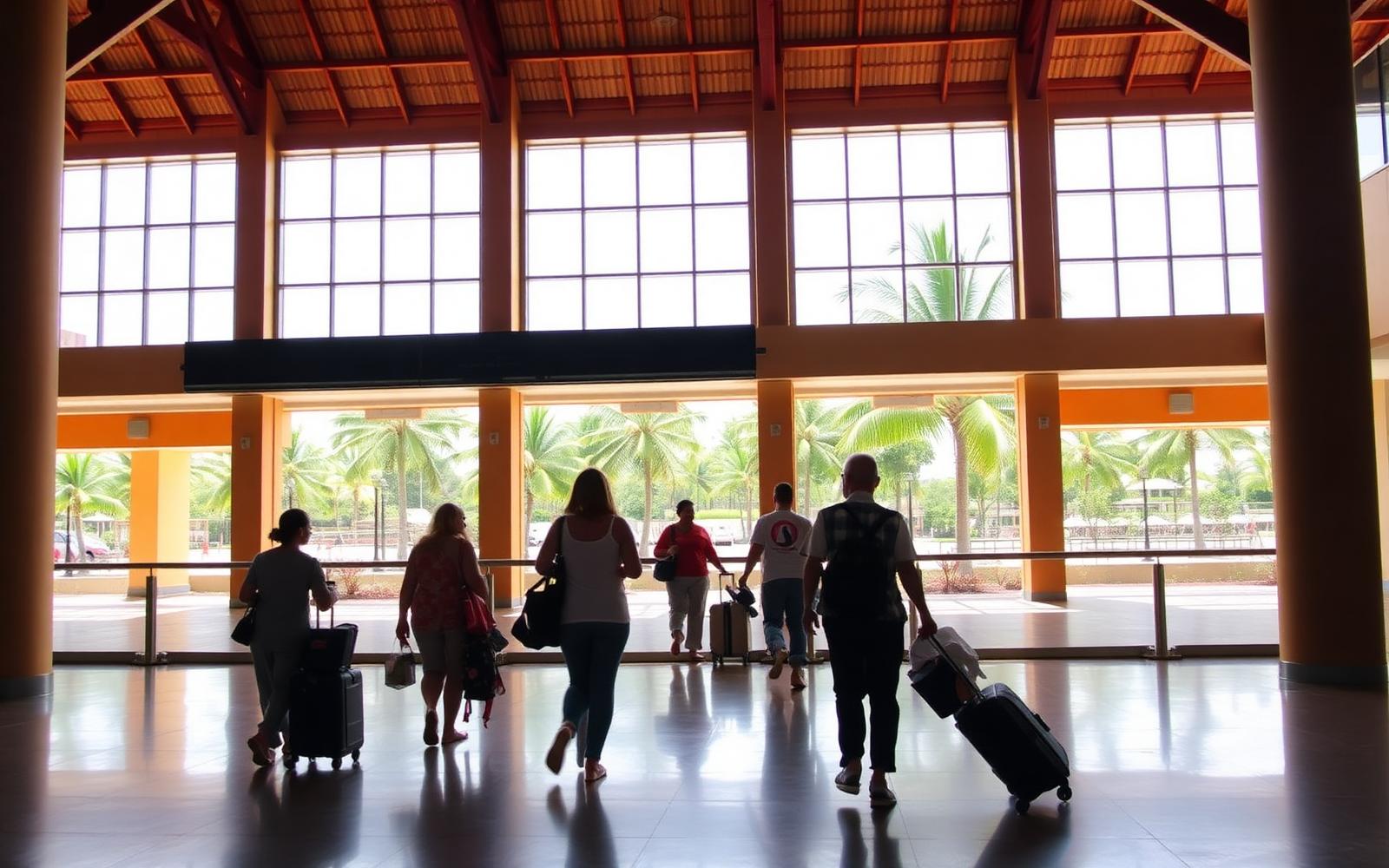
Punta Cana International (PUJ) is designed for exactly this traffic, and the process is usually 20–40 minutes end to end.
- Disembark — often via stairs onto the tarmac, into the open-air thatched-roof terminal.
- Immigration — present your passport and E-Ticket QR code. Expect a photo and possibly fingerprints. Officers may ask where you are staying and for how long.
- Baggage claim — porters will offer help; tipping a few USD is normal if you accept.
- Customs — usually a green-lane walkthrough; bags may be X-rayed.
- Arrivals hall — find your transfer representative. Ignore anyone offering unofficial taxis or "free upgrades," which are almost always timeshare pitches.
A departure tax is included in your airfare; you do not pay anything at the airport to leave.
Customs: what you can bring in and out
Into the Dominican Republic, tourists may generally bring personal effects, plus a modest duty-free allowance that typically covers up to 200 cigarettes and up to about one litre of spirits. Amounts of currency over US$10,000 (or the equivalent) must be declared on the E-Ticket. Do not bring drones without checking current rules — they are sometimes held at customs — and never travel with cannabis, which remains illegal in the Dominican Republic regardless of Canadian law.
Back into Canada, the Canada Border Services Agency personal exemptions are what matter:
| Time away from Canada | Duty- and tax-free allowance |
|---|---|
| 24 hours or more | CAN$200 (cannot include alcohol or tobacco; no partial claim if you exceed it) |
| 48 hours or more | CAN$800 (may include alcohol and tobacco within limits) |
| 7 days or more | CAN$800 (goods other than alcohol and tobacco need not accompany you) |
Most Caribbean vacations are five to seven nights, so the 48-hour, CAN$800 exemption is the one to plan around. Alcohol limits within that exemption are roughly 1.5 litres of wine, or 1.14 litres of spirits, or 8.5 litres of beer — and provincial rules apply on top. Currency of CAN$10,000 or more must be reported to CBSA.
Travel insurance: the line item Canadians skip and regret
Provincial and territorial health plans cover only a small fraction of out-of-country emergency costs, and they do not cover medical evacuation. A serious incident in Punta Cana can mean a private clinic requiring payment up front and, in the worst case, an air ambulance home costing tens of thousands of dollars.
Buy emergency medical travel insurance that includes:
- Emergency medical treatment and hospitalization
- Medical evacuation and repatriation
- Trip interruption and cancellation
- Coverage for any activity you actually plan to do — ATV tours, scuba diving and zipline circuits are excluded from some basic policies
Declare pre-existing conditions honestly. An undeclared condition is the most common reason a large claim gets denied. If you rely on a credit card's included coverage, read the certificate — limits, age caps and trip-length caps vary widely.
Health, water and medication
No vaccinations are required to enter the Dominican Republic from Canada. Routine vaccines should be up to date, and hepatitis A and typhoid are commonly recommended for Caribbean travel. Dengue is present, so pack repellent with DEET or icaridin.
Practical notes:
- Drink bottled or filtered water, including at resorts. Skip ice from street vendors.
- Bring medication in original labelled packaging, in your carry-on, with enough for the trip plus a few extra days.
- Bring a small first-aid kit — antihistamine, rehydration salts, anti-diarrheal, bandages, aloe. Resort shops charge tourist prices.
- Pack a paper copy of prescriptions if you travel with controlled medication.
Money for Canadians
The Dominican peso (DOP) is the local currency. US dollars are widely accepted in resort areas; Canadian dollars are not — most vendors will refuse them or offer terrible rates.
- Bring a small stack of USD in $1s and $5s for tipping.
- Use a credit card with no foreign transaction fee for larger purchases.
- Withdraw pesos from bank ATMs inside resorts, malls or banks rather than standalone street machines.
- Always choose to be charged in the local currency, not in CAD, when a terminal offers the choice.
Travelling with children or without both parents
Canadian children need their own passports. If a child is travelling with only one parent, with grandparents, or with a group, carry a notarized consent letter from the non-accompanying parent or guardian, plus copies of custody documents where relevant. Global Affairs Canada publishes a recommended template. Airlines and Dominican immigration both may ask, and the Dominican Republic pays close attention to minors travelling without both parents.
Registration and emergency help
Register with Canada's free Registration of Canadians Abroad (ROCA) service so consular officials can reach you in an emergency. Save the contact details for the Embassy of Canada in Santo Domingo, and note that Canada also operates an Emergency Watch and Response Centre reachable 24/7 from abroad.
Frequently Asked Questions
Do Canadians need a visa for the Dominican Republic in 2027?
No. Canadian citizens travelling as tourists do not need a visa for short stays, typically up to 30 days. You need a valid passport, the free online E-Ticket, and proof of onward travel. Extensions beyond the permitted stay are handled locally through the Dirección General de Migración for a fee.
What is the Dominican Republic E-Ticket and is it really free?
The E-Ticket is a mandatory online form that combines the old immigration card, customs declaration and health affidavit into one QR code. It is completely free at the official government portal, eticket.migracion.gob.do. You need one for entry and a separate one for exit. Third-party websites that charge a "processing fee" are unofficial resellers.
How long does my passport need to be valid to visit the Dominican Republic?
Canadian tourists need a passport valid for the duration of their stay. As a practical matter, avoid travelling with less than six months of validity, because airlines sometimes apply stricter standards than immigration authorities and can deny boarding.
Is travel insurance mandatory for the Dominican Republic?
It is not legally required, but it is strongly recommended. Provincial health plans cover only a fraction of foreign emergency care and do not cover medical evacuation, which can cost tens of thousands of dollars from the Caribbean. Choose a policy with emergency medical, evacuation and repatriation coverage, and confirm your planned activities are included.
How much alcohol can I bring back to Canada from Punta Cana?
After 48 hours or more outside Canada you can claim up to CAN$800 duty- and tax-free, which may include roughly 1.5 litres of wine, or 1.14 litres of spirits, or 8.5 litres of beer, subject to provincial limits. Amounts above the allowance are permitted but taxable.
Can I bring cannabis to the Dominican Republic?
No. Cannabis is illegal in the Dominican Republic and legal status in Canada is irrelevant abroad. It is also illegal to take cannabis out of Canada. Penalties for drug offences in the Dominican Republic are severe.
Do children need their own documents?
Yes. Every traveller, including infants, needs a passport and an E-Ticket entry. If a child travels without both parents, carry a notarized consent letter from the absent parent or guardian along with supporting custody documents.
Ready to book your Punta Cana trip?
Paperwork sorted? The fun part is next. Festopia Punta Cana 2027 bundles all-inclusive resort stays, event passes and payment plans into one booking for Canadian travellers, with real people to answer questions before you fly. Planning a celebration? See the Birthday Group program — hosts can earn a complimentary event pass when friends book. Next reads: travelling to Punta Cana from Canada and the Punta Cana travel checklist for Canadians.

Our team researches destinations, hotels, nightlife, excursions, and travel tips to help travelers plan unforgettable Festopia experiences around the world.
View all Travel Guides