Punta Cana Travel Checklist for Canadians
Punta Cana is an easy trip from Canada — five hours in the air, no visa, a short transfer, and a resort that feeds you. The things that go wrong are almost always small and preventable: an unfilled E-Ticket, a bank card frozen for suspicious activity, sunscreen the reef bans, no small bills for tips, and prescription medication buried in a checked bag that arrived a day late.
This checklist is written specifically for Canadian travellers, from four weeks out to the moment you clear CBSA on the way home. Work through it in order.
4–6 weeks before you go
- [ ] Check your passport validity. Canadian tourists need a passport valid for the duration of the stay, but never travel with less than six months remaining — airlines sometimes apply stricter rules than governments.
- [ ] Confirm everyone in the party has their own passport, including infants.
- [ ] Buy travel medical insurance with emergency medical, hospitalization, medical evacuation and repatriation, and trip interruption. Provincial health plans cover very little abroad and nothing for evacuation.
- [ ] Declare pre-existing conditions on your policy. Undeclared conditions are the top reason big claims get denied.
- [ ] Check activity coverage. ATV tours, ziplines, scuba and jet skis are excluded from some basic policies.
- [ ] Read the current Government of Canada advisory for the Dominican Republic.
- [ ] Book airport parking or a ride — off-airport lots with shuttles usually cost far less for a week.
- [ ] If travelling with a child without both parents, prepare a notarized consent letter plus custody documentation.
- [ ] Refill prescriptions so you have the full trip plus several extra days.
- [ ] Visit a travel clinic if needed. No vaccinations are required, but hepatitis A and typhoid are commonly recommended for Caribbean travel, and routine vaccines should be current.
1–2 weeks before
- [ ] Complete the Dominican E-Ticket at the official portal, eticket.migracion.gob.do — it is free, mandatory, and needed for both entry and exit. Details in our entry requirements guide for Canadians.
- [ ] Save your QR codes offline as screenshots, and print a paper copy.
- [ ] Tell your bank and credit card issuers your travel dates so cards are not frozen at the resort.
- [ ] Confirm you have a no-foreign-transaction-fee card if possible; the standard 2.5% FX fee is avoidable.
- [ ] Order US dollars in small bills — $1s and $5s for tipping. Canadian dollars are generally not accepted in the Dominican Republic.
- [ ] Buy an eSIM data plan or check your carrier's roaming pass. Canadian roaming is expensive; a local eSIM is usually cheaper.
- [ ] Check baggage allowances for your specific carrier — leisure airlines differ from mainline.
- [ ] Confirm your airport transfer is included or pre-booked.
- [ ] Email yourself copies of passports, insurance policy, flight details, resort confirmation and the E-Ticket QR codes.
- [ ] Set up a shared group chat if you are travelling with friends, and pin the resort name, address and check-in times.
What to pack
Documents and money (carry-on only)
- [ ] Passport
- [ ] Printed and digital E-Ticket QR codes (entry and exit)
- [ ] Insurance policy number and 24-hour assistance phone number
- [ ] Flight and resort confirmations
- [ ] Two payment cards from different networks, stored separately
- [ ] USD small bills for tipping
- [ ] Photocopy of passport information page
- [ ] Notarized consent letter, if applicable
Clothing for a resort week
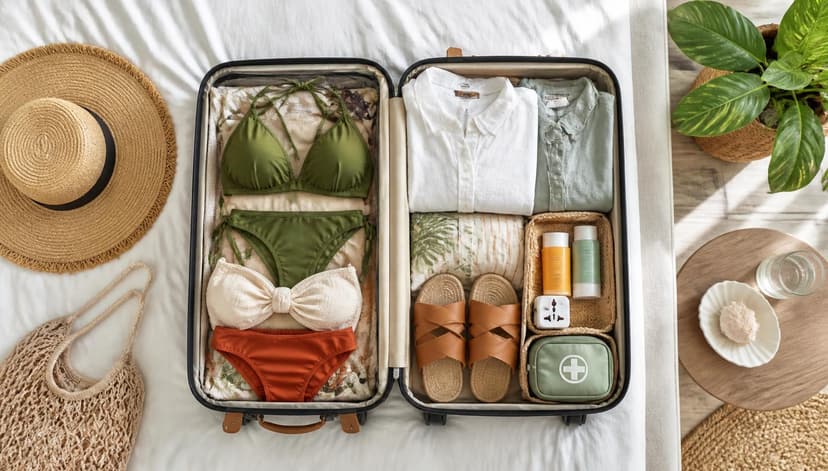
- [ ] 2–3 swimsuits (they never dry as fast as you expect)
- [ ] Light, breathable daywear — linen, cotton, quick-dry
- [ ] One or two smart-casual outfits: most à la carte restaurants require covered shoes, long pants for men, and no beachwear at dinner
- [ ] Cover-up or sarong
- [ ] Sandals plus one pair of walking or excursion shoes
- [ ] Light layer for over-air-conditioned restaurants and the flight home
- [ ] Wide-brim hat and sunglasses
- [ ] Small day bag or beach tote
Sun, health and bug protection
- [ ] Reef-safe sunscreen, SPF 30–50 — some resorts and protected areas restrict oxybenzone and octinoxate
- [ ] After-sun aloe
- [ ] Insect repellent with DEET or icaridin (dengue is present in the region)
- [ ] Prescription medication in original labelled packaging, in carry-on
- [ ] Basic first-aid kit: antihistamine, pain relief, rehydration salts, anti-diarrheal, bandages, motion sickness tablets
- [ ] Hand sanitizer

Tech
- [ ] Phone plus charger — the Dominican Republic uses the same Type A/B plugs and 110V as Canada, so no adapter is needed
- [ ] Portable power bank (carry-on only, never checked)
- [ ] Waterproof phone pouch
- [ ] Refillable water bottle
- [ ] Headphones and a downloaded playlist or show for the flight
Nice to have
- [ ] Packable dry bag for boat excursions
- [ ] Snorkel mask if you are particular about fit
- [ ] Travel laundry sheets for swimwear
- [ ] Collapsible tote for bringing home purchases
- [ ] Zip bags for wet swimwear on the return flight
The day before
- [ ] Check in online and download boarding passes
- [ ] Verify both E-Ticket QR codes are saved offline
- [ ] Confirm flight status and terminal
- [ ] Charge every device and the power bank
- [ ] Set out weather-appropriate layers for a Canadian winter drive to the airport
- [ ] Weigh your bags at home
- [ ] Arrange pet, plant and mail coverage
- [ ] Screenshot your resort address and transfer voucher
Airport and flight day
- [ ] Arrive three hours before an international departure in winter — de-icing and March Break lines are real
- [ ] Keep passports, medication, power bank and a change of swimwear in your carry-on
- [ ] Liquids in carry-on: 100 ml containers in a single clear 1 L bag
- [ ] Empty your water bottle before security, refill after
- [ ] Dress in layers you can shed the moment you land
Arriving in Punta Cana
Immigration usually takes 20–40 minutes at PUJ, and Bávaro, Cap Cana and Uvero Alto transfers typically run 15–45 minutes.
- [ ] Have passport and E-Ticket QR code in hand before you reach the desk
- [ ] Expect a photo and possibly fingerprints
- [ ] Tip porters a few USD if you accept help
- [ ] Meet your pre-booked transfer representative — ignore unofficial taxi offers and anyone promising a "free upgrade," which is a timeshare pitch
- [ ] Ask at check-in about à la carte reservations immediately; they book out on day one
- [ ] Photograph your room number and the resort's front-desk number
At the resort
- [ ] Drink bottled or filtered water, including for brushing teeth if you are sensitive
- [ ] Reapply sunscreen every two hours — the sun near 18° north is stronger than any Canadian summer
- [ ] Use the room safe for passports and spare cash
- [ ] Keep a photo of your passport on your phone and leave the original in the safe when off-property
- [ ] Book excursions through the resort desk or a reputable insured operator
- [ ] Hydrate between drinks; sun plus alcohol is what actually ruins day two
- [ ] Save the insurance assistance number in your phone as a contact
Going home: the CBSA part
- [ ] Complete your exit E-Ticket before you leave for the airport
- [ ] Arrive at PUJ three hours before departure — check-in there can be slow
- [ ] Know your CBSA personal exemption: CAN$800 after 48 hours or more away, which can include roughly 1.14 L of spirits, or 1.5 L of wine, or 8.5 L of beer, subject to provincial limits
- [ ] Declare everything. Undeclared goods, especially food, plants and agricultural products, are a common source of penalties
- [ ] Report currency of CAN$10,000 or more
- [ ] Keep receipts for anything of value
- [ ] Pack liquids like rum and vanilla in checked bags, wrapped
The five things Canadians forget most
- The exit E-Ticket. Everyone remembers the arrival one.
- Small USD bills. Nobody at a resort can break a $50 for a $2 tip.
- Telling the bank. A frozen card on day one is a miserable afternoon.
- Reef-safe sunscreen. Restricted at some sites, and hard to buy at resort prices.
- Insurance details, not just insurance. The policy is useless if the number is in an email you cannot load.
Frequently Asked Questions
What documents do Canadians need for Punta Cana?
A Canadian passport valid for your stay, the free Dominican E-Ticket completed online for both entry and exit, and proof of return travel. No visa or tourist card purchase is required. Travel medical insurance is not legally required but is strongly recommended.
Do I need a power adapter in Punta Cana from Canada?
No. The Dominican Republic uses the same 110–120V supply and Type A/B plugs as Canada, so Canadian chargers and appliances work without an adapter or converter.
Can I drink the water at Punta Cana resorts?
Stick to bottled or filtered water, which resorts provide. Ice at reputable resorts is generally made with purified water, but avoid ice and raw produce from street vendors. Bring a refillable bottle and top it up at resort water stations.
How much cash should I bring to an all-inclusive in Punta Cana?
Many Canadian couples bring US$150–$300 in small bills for a week, mostly for tips, plus a no-foreign-transaction-fee credit card for excursions and shops. Canadian dollars are rarely accepted, so bring USD or withdraw Dominican pesos from a bank ATM.
What should I not pack for the Dominican Republic?
Leave behind cannabis in any form, drones (which can be held at customs), large amounts of jewellery, and anything you would be upset to lose. Also skip full-size liquids in carry-on, and avoid packing prescription medication in checked luggage.
How much can I bring back to Canada duty-free?
After 48 hours or more outside Canada you can claim up to CAN$800 in goods duty- and tax-free, which may include limited alcohol and tobacco. After 24 hours the allowance is CAN$200 and excludes alcohol and tobacco. Declare everything to CBSA, whether or not it is within your allowance.
Is Punta Cana safe for Canadian travellers?
The Government of Canada advises exercising a high degree of caution due to crime. Most Canadian visitors have trouble-free trips by staying within established resort areas, using pre-booked transfers, avoiding unlit areas at night, keeping valuables in the room safe and not carrying large amounts of cash. Check the current advisory before you fly.
Ready to go?
FesTopia handles the parts of a Punta Cana trip that are easy to get wrong — resort, transfers, event passes, payment plans — so your checklist is mostly packing. See Festopia Punta Cana 2027, and if you are travelling for a birthday, the Birthday Group program can earn the host a complimentary event pass when friends book. Next reads: best departure airports in Canada for Punta Cana and Punta Cana for first-time visitors.

Our team researches destinations, hotels, nightlife, excursions, and travel tips to help travelers plan unforgettable Festopia experiences around the world.
View all Travel Guides