Punta Cana vs Mexico: Which Vacation Is Better for Canadians?
Every winter, millions of Canadians face the same question: fly south to the Dominican Republic, or head to Mexico? Both deliver warm water, all-inclusive resorts and a flight short enough to leave Toronto in a parka and be in a swimsuit by lunch. But they are not interchangeable. Flight access, all-inclusive value, food, nightlife, excursions and even how far your Canadian dollar stretches all differ in ways that matter once you are actually there.
This guide compares Punta Cana and Mexico's main beach regions — Cancun and the Riviera Maya, plus Los Cabos and Puerto Vallarta — specifically from a Canadian traveller's point of view. Prices, flight patterns and packing notes are written for people leaving from Canadian airports, not from Florida.
The short answer
If your priority is all-inclusive value, a shorter transfer from the airport and a pure beach-and-resort week, Punta Cana usually wins.
If your priority is culture, ruins, cenotes, walkable towns and a wider range of non-resort activities, Mexico usually wins.
If you are flying from Western Canada, Mexico is generally easier to reach. From Ontario, Quebec and Atlantic Canada, Punta Cana is often the cheaper and simpler flight.
Everything below is the detail behind those three sentences.
Flights: where you live changes the answer
This is the single biggest factor, and most comparison articles ignore it.
Punta Cana International (PUJ) is one of the busiest leisure airports in the Caribbean and has long been a core Canadian winter market. Nonstop service runs from Toronto with several carriers, plus seasonal nonstops from Montreal, Ottawa, Quebec City, Halifax, Calgary and — newly — Winnipeg, which got its first direct link in the 2026–27 winter season. Toronto to Punta Cana is roughly a five-hour flight.
Mexico's advantage is breadth. Cancun is served from more Canadian cities than almost any other sun destination, and Western Canada has strong nonstop coverage to Cancun, Los Cabos and Puerto Vallarta from Vancouver, Calgary and Edmonton. If you live west of Manitoba, Mexico will usually give you more departure days, more airlines and more competitive fares.
| From | Punta Cana | Cancun |
|---|---|---|
| Toronto | Nonstop, ~5h, daily in winter | Nonstop, ~4h, multiple daily |
| Montreal | Nonstop, ~5h, seasonal | Nonstop, ~4h30m, seasonal-plus |
| Halifax / Quebec City | Seasonal nonstop, limited days | Seasonal nonstop, limited days |
| Calgary / Edmonton | Limited seasonal nonstop | Strong nonstop coverage |
| Vancouver | Usually one connection | Nonstop, ~5h30m |
Schedules shift every season, so treat this as a pattern rather than a timetable. For a detailed breakdown of Canadian gateways, see our guide to the best departure airports in Canada for Punta Cana.
Airport-to-resort transfers
Punta Cana's resort zone (Bávaro, Cap Cana, Uvero Alto) sits close to the airport. Most transfers land between 15 and 45 minutes. That is a real quality-of-life advantage on a five- or six-night trip.
In Mexico, Cancun's Hotel Zone is 20–30 minutes from the airport, but Playa del Carmen is closer to an hour and Tulum can be 90 minutes or more from Cancun airport, even with Tulum's newer airport absorbing some traffic. Los Cabos transfers run 30–45 minutes to the corridor hotels.
If you hate long shuttle rides after a 5 a.m. wake-up in Canada, Punta Cana is friendlier.
All-inclusive value: what your dollar actually buys
Both destinations are all-inclusive heartlands, but the pricing curves differ.
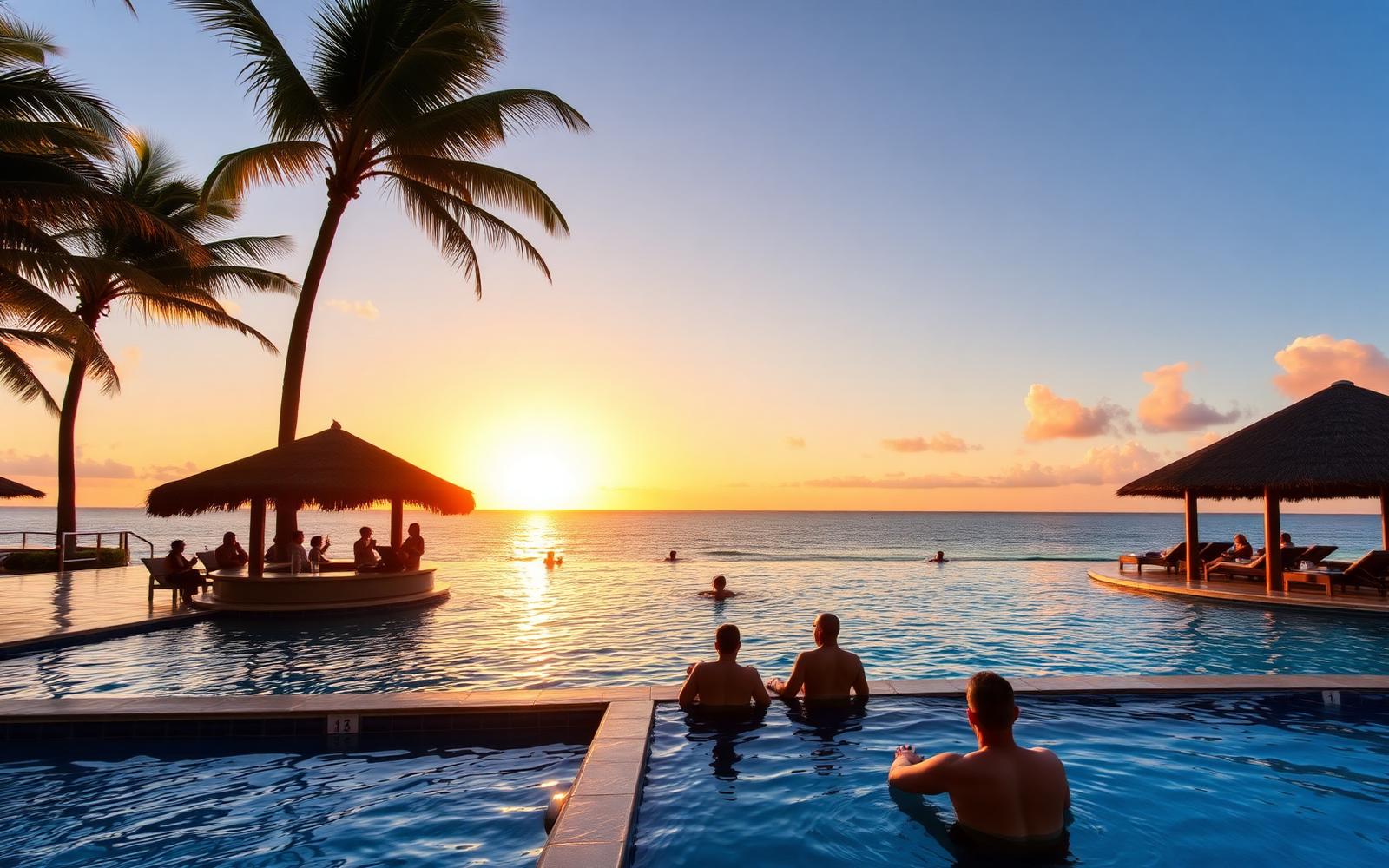
Punta Cana built its reputation on high-volume, high-quality all-inclusive resorts, and the mid-market tier — four-star properties with several à la carte restaurants, big pools, entertainment and beach service — is unusually deep. Canadians consistently find that a given nightly budget buys a slightly better room category and more inclusions here than in Cancun's Hotel Zone.
Cancun and the Riviera Maya span a wider spectrum, from budget properties to some of the most expensive all-inclusive resorts in the world. That range is a strength if you want luxury, and a trap if you shop on headline price alone: cheap Cancun properties are often older, further from good swimming beaches, or paired with heavy timeshare pressure.
Practical value notes for Canadians:
- Beach quality: Punta Cana's Bávaro coast is famous for wide, swimmable, gently sloping sand. Parts of the Riviera Maya have shorter or rockier beach frontage, and beachfront varies dramatically between neighbouring resorts.
- Sargassum: Both regions get seaweed, typically strongest from roughly April to August. Mexico's Caribbean coast has had the higher-profile problems in recent years, though conditions vary week to week and resort to resort.
- Tipping culture: Expect to tip in both. In the Dominican Republic, small USD bills are welcome; in Mexico, pesos or USD both work.
- Currency: You will not need Dominican pesos or Mexican pesos for a resort-only trip, but a bit of local cash helps for markets and taxis. Canadian dollars are rarely accepted well in either country — bring USD or use a no-foreign-transaction-fee card.
For a Canada-specific cost model, read travelling to Punta Cana from Canada and our tactics for saving money on all-inclusive vacations.
Things to do beyond the resort
This is where Mexico's case is strongest.
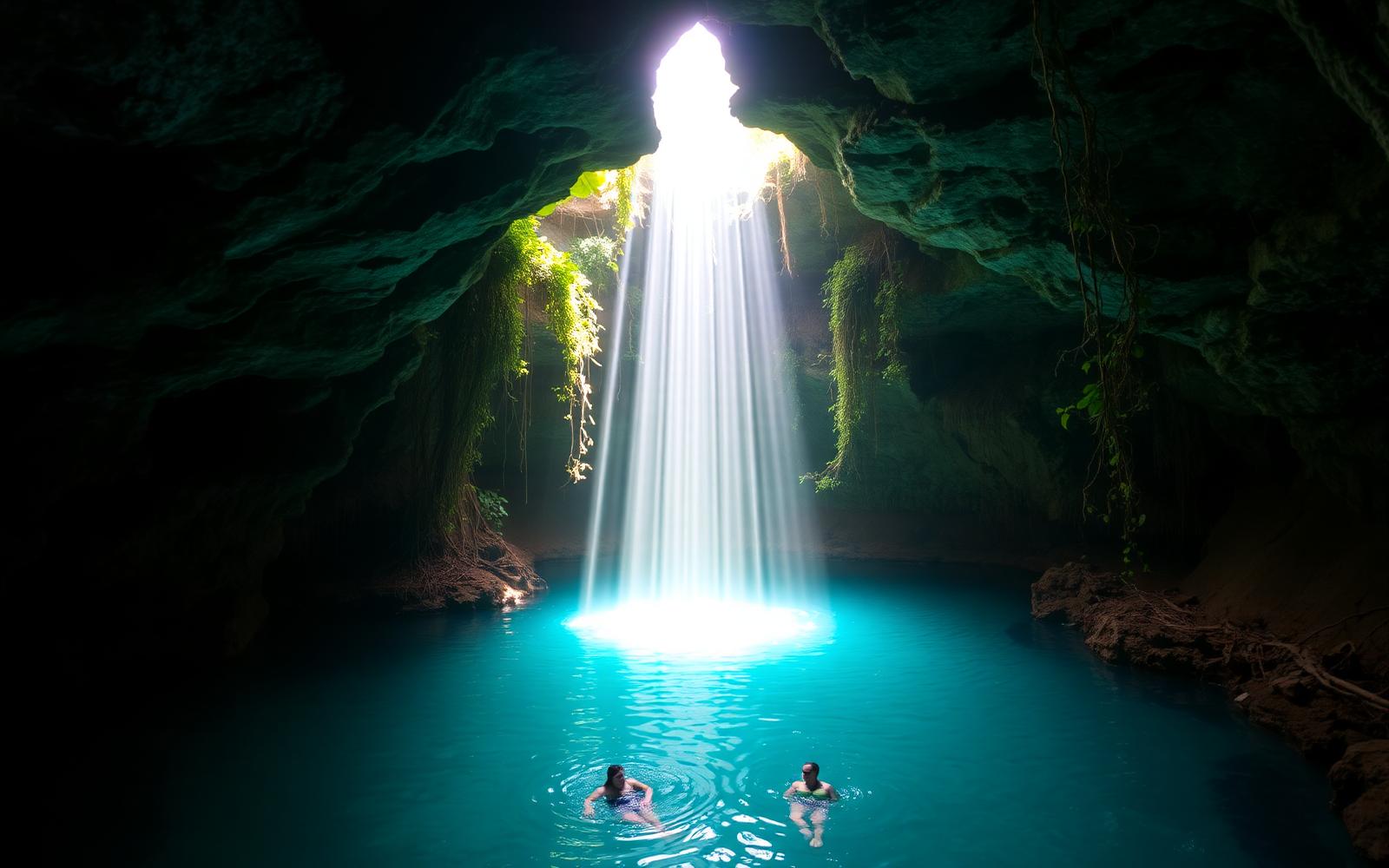
Mexico gives you: Chichén Itzá and Tulum's cliffside ruins, hundreds of cenotes, Isla Mujeres and Cozumel day trips, world-class diving on the Mesoamerican Reef, Playa del Carmen's Quinta Avenida, Valladolid's colonial streets, and a food scene that ranges from street tacos to fine dining. In Los Cabos you add desert-meets-ocean scenery and whale watching; in Puerto Vallarta, a genuinely charming old town.
Punta Cana gives you: catamaran and Saona Island trips, Hoyo Azul and the Scape Park cenote area, buggy and zipline circuits, Macao Beach surf lessons, world-class golf at Cap Cana and Punta Espada, whale watching in Samaná (seasonal, and a long day trip), plus Santo Domingo's Zona Colonial — the oldest European city in the Americas — about three hours away.
The honest summary: Punta Cana's excursion menu is excellent but resort-centric, while Mexico's is deeper and more independent. If you plan to leave the property most days, Mexico rewards that. If you plan two excursions and five pool days, the difference barely registers.
Punta Cana's counterpoint is everything there is to do beyond the beach — more than most first-timers expect.
Nightlife and group energy
Cancun's Hotel Zone has the loudest, most concentrated nightlife in either country, and it skews young and very busy during spring break. Playa del Carmen is more mixed and walkable. Los Cabos leans upscale-lounge; Puerto Vallarta has a famous LGBTQ+ nightlife scene.
Punta Cana's nightlife is more resort-anchored — big entertainment programs, beach clubs like Coco Bongo Punta Cana, and event-driven weekends — which suits groups who want to stay together rather than bar-hop across a strip. That structure is exactly why destination festival weekends have grown so quickly here: the venues, resorts and airport are close together. Our Punta Cana vs. Cancun festival comparison breaks that down for event travellers.
Safety, entry rules and paperwork for Canadians
Both countries carry the same overall Government of Canada risk level — "exercise a high degree of caution" — with the specifics differing by region. Always read the current advisory at travel.gc.ca before you book, and again before you fly.
Dominican Republic: Canadians do not need a tourist visa for short stays. You need a passport valid for your stay and the free online E-Ticket for both entry and exit, which replaced the old paper immigration and customs cards. Full details in our Dominican Republic entry requirements guide for Canadians.
Mexico: Canadians do not need a visa for tourism. Mexico has largely digitized its entry form, and some airports issue an electronic FMM; entry-stamp lengths can vary at the officer's discretion, so check your permitted days before leaving the airport.
Weather and when to go
The two destinations share a broadly similar calendar: dry, warm and reliable from roughly December through April, hotter and wetter from June through October, with Atlantic hurricane season running June 1 to November 30.
Differences worth noting:
- Punta Cana's temperatures are steadier year-round, with less seasonal swing than Cancun.
- Cancun's shoulder months (May, November) often produce the best combination of price and weather.
- Los Cabos is a desert climate — drier, cooler evenings, and a genuinely different feel from the Caribbean.
- Peak Canadian demand (Christmas, March Break) inflates both destinations by 30–60%.
More detail: the best time to visit Punta Cana from Canada.
Which one should you book?
Choose Punta Cana if you: want maximum all-inclusive value, a short airport transfer, big swimmable beaches, a resort-focused week, or you are travelling with a group or celebrating a birthday and want everyone in one place.
Choose Mexico if you: want ruins, cenotes and culture, plan to leave the resort often, want a walkable town base like Playa del Carmen, are flying from Western Canada, or want the widest possible range of resort price tiers.
Choose either if: you mostly want warm water and a break from February. Honestly, both deliver — the wrong choice here is still a good vacation.
The best destination is the one that matches how you actually spend a vacation, not the one with the better photos.
Frequently Asked Questions
Is Punta Cana or Cancun cheaper for Canadians?
For comparable four-star all-inclusive resorts, Punta Cana is usually slightly cheaper per night, and its mid-market tier tends to include more. Cancun can beat it on total cost when there are aggressive package sales or when you are flying from Western Canada, where Cancun fares are more competitive. Compare the packaged total — flight, transfer, resort, taxes — rather than nightly rates.
Which has better beaches, Punta Cana or Mexico?
Punta Cana, on average. The Bávaro coastline offers long, wide, gently sloping white-sand beaches that are consistently swimmable. Mexico's Caribbean coast has spectacular beaches too, but frontage varies far more between resorts, and some Riviera Maya properties have rocky or narrow shorelines.
How long is the flight to Punta Cana from Canada?
About five hours nonstop from Toronto, roughly five hours from Montreal, and slightly longer from Atlantic Canada or the Prairies. Cancun is typically 30–60 minutes shorter from Eastern Canada and considerably easier to reach nonstop from Vancouver, Calgary and Edmonton.
Do Canadians need a visa for the Dominican Republic or Mexico?
No visa is required for tourism in either country for short stays. The Dominican Republic requires the free online E-Ticket for entry and exit, and Mexico uses a digital entry form at most airports. Carry a passport valid for the duration of your trip and confirm current rules on travel.gc.ca before departure.
Is the Dominican Republic safe for Canadian tourists?
The Government of Canada advises exercising a high degree of caution in the Dominican Republic due to crime, the same overall level it applies to Mexico. Most Canadian visitors have trouble-free trips by staying in established resort areas, using resort or pre-booked transfers, avoiding unlit areas at night, and not displaying valuables. Read the current advisory before you travel.
Which is better for a group trip or birthday celebration?
Punta Cana, in most cases. Short transfers, huge resort capacity, group-friendly all-inclusive pricing and a concentrated entertainment scene make it easier to keep 8, 12 or 20 people together without complex logistics — which is exactly why group travel saves money here.
Planning a Punta Cana trip from Canada?
FesTopia builds all-inclusive Punta Cana weekends around groups: resort packages, event passes, payment plans and one point of contact instead of six booking sites. If you are leaning Caribbean, start with Festopia Punta Cana 2027 — and if you are travelling for a birthday, our Birthday Group program can earn the host a complimentary event pass when friends book.

Our team researches destinations, hotels, nightlife, excursions, and travel tips to help travelers plan unforgettable Festopia experiences around the world.
View all Travel Guides