Do UK Citizens Need a Visa for the Dominican Republic?

Last updated: August 2026. Visa rules, passport requirements and entry procedures change. Always confirm current rules on official UK and Dominican Republic government sources before you travel.
Most British citizens can travel to the Dominican Republic for a short tourist stay without a visa. Instead, all arriving travellers — regardless of nationality — must complete the free electronic Dominican Republic e-Ticket before entry. That said, the details matter: your passport type, length of stay, purpose of travel and travelling companions can all affect what you need.
This guide walks British travellers through what to expect at the Dominican border for a holiday in Punta Cana, and where to verify the current rules from official sources.
Table of Contents
- Quick answer: do UK citizens need a visa?
- Passport validity guidance
- Length of permitted tourist stay
- The Dominican Republic e-Ticket
- Tourist card arrangements
- Return or onward travel
- Travelling with children
- Dual nationality
- Emergency travel documents
- Staying longer than permitted
- Customs considerations
- Where to verify current rules
- FAQs
Quick answer: do UK citizens need a visa?
For a short tourist trip — the type of holiday most Britons take in Punta Cana — full British citizens generally do not need a visa to enter the Dominican Republic. Entry is granted at the border, subject to normal immigration checks and completion of the mandatory e-Ticket.
Requirements can be different if:
- You hold a British passport but are not a British citizen (for example British National (Overseas), British Overseas Citizen, etc.).
- You plan to work, study or stay long-term.
- You are travelling on an emergency travel document.
- You have overstayed in the Dominican Republic on a previous trip.
Always confirm your specific situation before travel.
Passport validity guidance
::: warning Check your passport now, not on the way to the airport. Airlines can deny boarding if your document doesn't meet the destination's rules. :::
The Dominican Republic generally expects a passport that is valid for the duration of your stay. Some airlines and authorities recommend at least six months' validity as best practice, and it's the safest planning target. Your passport should also have blank pages for entry and exit stamps.
If your passport is close to expiring, renew it before you book. UK passport renewal times can lengthen around peak travel periods.
Length of permitted tourist stay
For tourism, British visitors are usually admitted for a stay of up to a set number of days recorded on entry. The most common allowance for casual tourism is up to 30 days, though longer stays may be possible depending on current policy. Immigration officers set the actual length of stay at the border.
If you plan to stay longer than the standard tourist allowance:
- Confirm current rules on official Dominican government sources.
- Understand that overstays typically trigger a fee payable at departure, calculated by the length of overstay.
The Dominican Republic e-Ticket
Every traveller entering or leaving the Dominican Republic — including British citizens — must complete the free electronic e-Ticket before travel. It combines immigration, customs and health declarations into a single form.
Key points:
- The e-Ticket is free. Only use the official portal at https://eticket.migracion.gob.do. Third-party sites often charge a fee for a form you can complete yourself in minutes.
- Complete it in the days before departure, not months in advance.
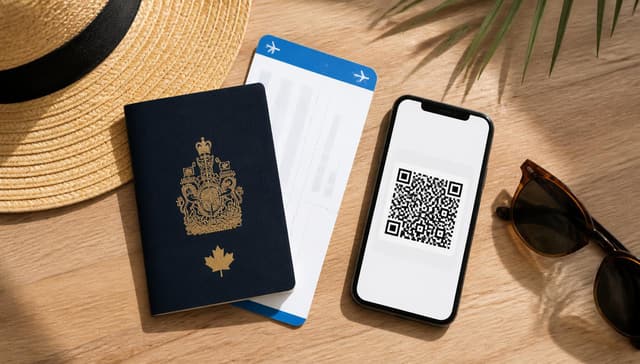
- Save the QR code (screenshot or PDF) on your phone and keep a printed copy in your carry-on.
- Each traveller — including children and infants — needs their own e-Ticket.
For a broader picture of Dominican Republic entry, see our companion article on Dominican Republic entry requirements for 2027.
Tourist card arrangements
The Dominican Republic historically required arriving tourists to pay a Tourist Card fee, but this fee has, for the majority of arrivals by air, been incorporated into airline ticket prices. In practice, most UK holidaymakers arriving on scheduled or package flights will not need to purchase anything separately at the airport.
Confirm the current arrangement with your airline before travel, and keep a copy of your ticket as proof of the included fee.
Return or onward travel
Immigration officers may ask to see evidence of onward or return travel — typically your return flight confirmation. Keep a printout or a digital copy accessible on your phone, especially if you are arriving on a one-way flight or an unusually long itinerary.
Travelling with children
Children of any age need their own valid passport and their own e-Ticket. Additional considerations:
- If a child is travelling with only one parent, or with a guardian who is not their parent, the Dominican authorities may request a signed letter of consent from the non-travelling parent.
- Immigration rules for children can change; check the latest guidance on the UK government travel advice pages for the Dominican Republic.
Dual nationality
If you hold both a British passport and another passport (for example, an EU or US passport), you can typically choose which document to travel on — but be consistent:
- Use the same passport for the outbound and return legs.
- The passport you use will determine visa/entry rules.
- If you're a dual British/Dominican citizen, you may be treated as a Dominican national on entry and required to travel on your Dominican passport.
Emergency travel documents
If you lose your passport before travel, the UK Foreign, Commonwealth & Development Office can issue an Emergency Travel Document (ETD). Not every country accepts ETDs for entry, and rules can be different for tourism vs transit. If you need to travel to the Dominican Republic on an ETD, contact the Dominican Embassy or the nearest Dominican consular office to confirm current requirements.
Staying longer than permitted
If you overstay your tourist allowance, you'll typically be charged an overstay fee when you leave the country. The fee scales with the length of the overstay. Repeated or extended overstays can affect future admissibility to the Dominican Republic. Plan your dates carefully; if your plans change once you arrive, contact the local immigration office to understand your options.
Customs considerations
Dominican customs rules are broadly similar to those in many other Caribbean countries. Common points to remember:
- Declare currency above the reporting threshold (this can change; check current rules).
- Do not attempt to bring in restricted items (fresh produce, meat products, plants, etc.).
- Alcohol and tobacco duty-free allowances are limited.
Complete the customs section of the e-Ticket honestly. Random baggage checks do occur at PUJ.
Where to verify current rules
Before every trip, cross-check with at least two official sources:
- UK government travel advice for the Dominican Republic: https://www.gov.uk/foreign-travel-advice/dominican-republic
- Dominican Republic e-Ticket portal (official): https://eticket.migracion.gob.do
- Embassy of the Dominican Republic in London: for detailed nationality- and case-specific enquiries.
Do not rely solely on travel blogs, airline pages or forum posts — they can be out of date. Cross-reference with the official pages above.
Requirement quick-check for British tourists
| Requirement | Typical answer for a UK tourist | Where to confirm |
|---|---|---|
| Visa for a short holiday | Not usually required | UK government travel advice |
| Passport validity | Valid for stay; 6 months recommended | UK government / airline |
| e-Ticket | Required for every traveller | eticket.migracion.gob.do |
| Tourist Card fee | Usually included in air ticket | Your airline |
| Return/onward ticket | May be requested at immigration | Airline |
| Overstay fee | Payable on departure if you overstay | Dominican migration |
FAQs
Do I need to apply for a Dominican Republic visa in London before I fly? For a short tourist trip, most British citizens do not. You'll complete the e-Ticket before departure.
Is the e-Ticket the same as a visa? No. The e-Ticket is an immigration, customs and health declaration form, not a visa. It's mandatory but not a visa document.
Can I stay in the Dominican Republic for 30 days as a UK tourist? The standard tourist allowance is typically up to 30 days; longer stays may be possible under current policy. Confirm with official sources close to your travel date.
Do I need a return ticket to enter the Dominican Republic? Immigration officers can request proof of onward travel. Always travel with a printed or digital copy of your return itinerary.
Do my children need their own e-Ticket? Yes. Each traveller needs a separate e-Ticket, including infants.
Does the Dominican Republic recognise UK Emergency Travel Documents for tourism? Rules can change. Contact the Dominican Embassy in London for the latest guidance.
Is my Punta Cana holiday affected if I hold a British Overseas Territories passport? Different British passport variants can have different visa rules. Check both UK government advice and the Dominican Embassy.
Final thoughts
For most British tourists, entering the Dominican Republic is refreshingly simple: a valid passport, the free e-Ticket and evidence of onward travel are the essentials. If your circumstances are unusual — a non-British passport, dual nationality, an emergency travel document or a long stay — check with the Dominican Embassy in London and the UK government's travel advice before booking.
Once your paperwork is squared away, the next question is usually cost. Our companion guide on how much a Punta Cana holiday costs from the UK walks through realistic budgets in GBP, and you can explore Festopia's Punta Cana experiences at festopia.com once your dates are locked in.

Our team researches destinations, hotels, nightlife, excursions, and travel tips to help travelers plan unforgettable Festopia experiences around the world.
View all Travel Guides